
The Buzz Around Hive | CX Magazine Article
The media server market has been ripe for a new entrant. At the moment, there’s a vast middle ground missing between all-singing, all-dancing units like disguise, and simple solutions like BrightSign. You’ve either got a big expensive, centralised box capable of mind-bending real-time effects, or a cheaper networked alternative that’s really just for digital signage.
Source: Published by CX Magazine
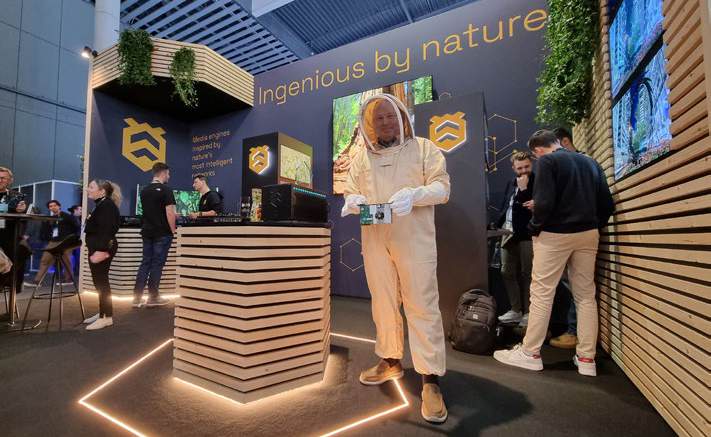
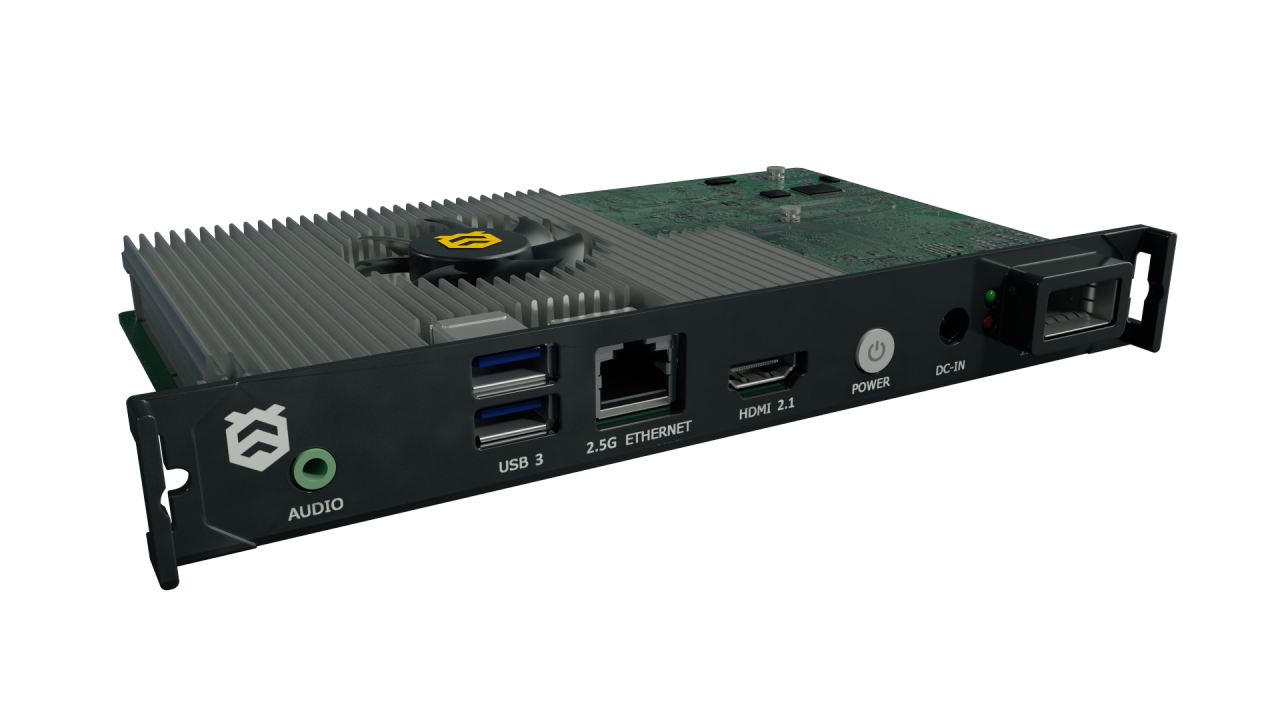
That’s why Hive caught my eye on the showfloor at ISE back in 2024. Starting up in the UK, it was one of the company’s first tradeshow outings, and there was, of course, a lot of buzz (sorry). Their offering is based around the ingenious Beeblade; a card-based system that runs on Intel’s Smart Display Module (SDM) platform. This means they can be fitted in projectors and LED controllers that have an SDM slot, or run in one of three sizes of dedicated housings that Hive build. The Beeblades have four variations, with differing storage and processing power, and one variation of connectivity.
This modularity means it is incredibly easy to right-size any project, only buying and using the processing you need. The software is fantastic – even I, a sound guy, found it intuitive. It runs on everything, and can be controlled via a browser. You can even build your own GUIs for your client.
Leaning into the rampant puns, Hive’s Nigel Sadler has given himself the job title of ‘Chief Pollinator’, which the rest of us would call Business Development Manager. It’s his job to find and get big projects, spread the word, and manage client relationships. On the back of the announcement that ULA Group are now the Hive distributor for Australia and New Zealand, I spoke with Nigel over Teams about the history of the company, big projects Down Under, and the future of media servers.
Hive was started by three friends; Dave Green, Mark Calvert and Trey Harrison. They'd been working together for a long time on various projects. Dave Green was the developer of the AI media server that is sold by Avolites. I was one of the founders and developers of Green Hippo, and I worked on that for 23 years.
When it came to installation projects where the servers were doing the same thing every day and night, it turns out we were both feeling guilty selling a big box that was capable of doing all of this insane real time stuff, but it's just doing the exact same thing over and over again. Does it really need to be this big, powerful, expensive box?
While Dave and Nigel were both working their parallel lives building traditional live production media servers, they were both thinking the same thing;.
Dave Green acted on this thought as the UK went into pandemic lockdown. He’d been making small, custom products for his projects, which led him to think that there was real market demand for this kind of product. The idea of a distributed, scalable, efficient, and cheaper media server environment had been born.
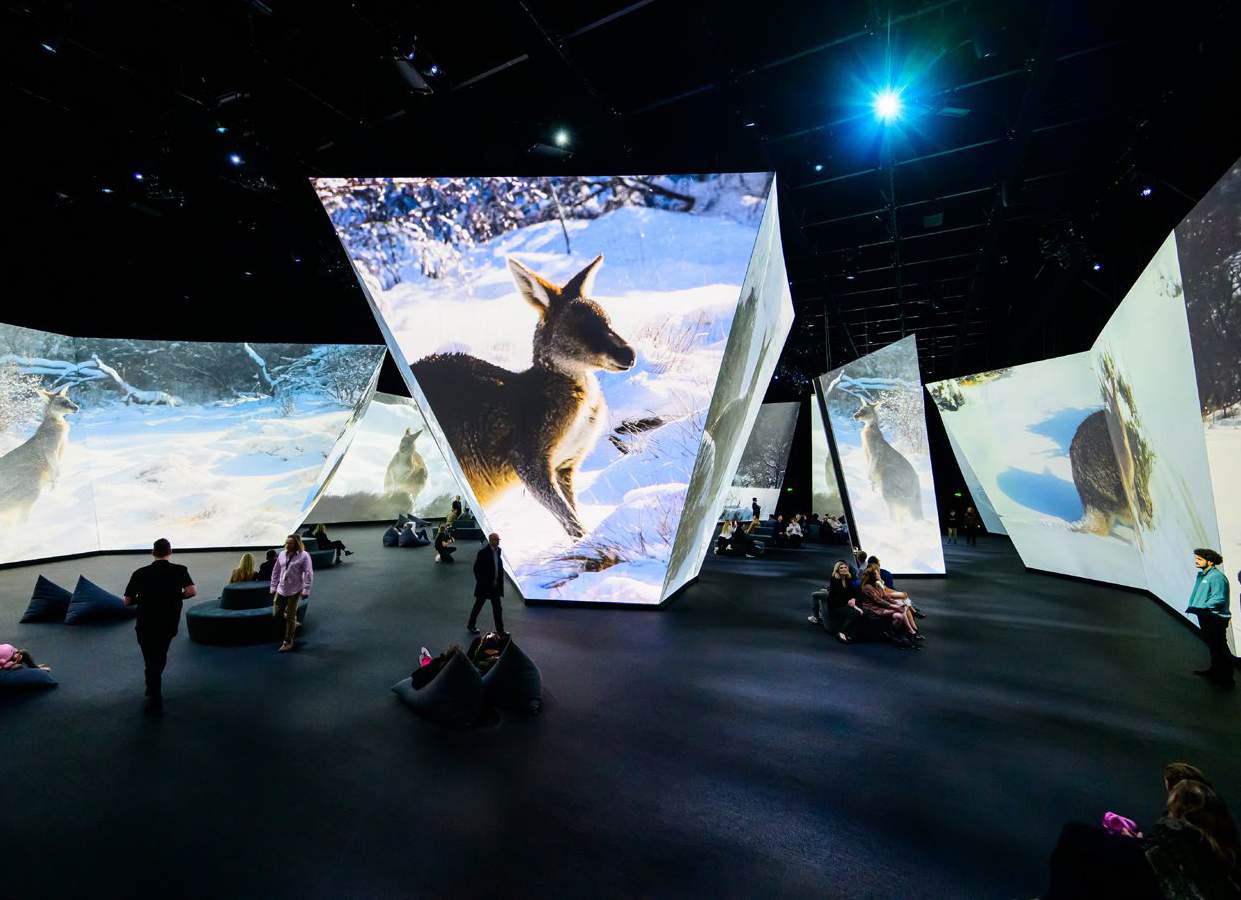
It meant that we could make scalable systems. It also meant that there were existing displays and projectors that we could put the blades into directly. This made a huge difference for projects like BBC Earth, which opened and ran in Melbourne. We were using Panasonic projectors and putting the blades inside. Intel has been promoting the format, and there were a whole host of new products with Intel SDM slots debuted at ISE this year. We’re now starting to see Intel SDM slots on LED processors.
Adopting the Intel SDM format gave Hive a design for their blade.
The Nucleus is 1RU with two SDM slots. It's designed for using our Beeblades, but they're just standard Intel SDM slots, so technically, you could plug anyone's SDM cards into them. It's allowing people to have a standard frame and insert size. It’s a really good format to use as a manufacturer because you can use it to standardise your product range.
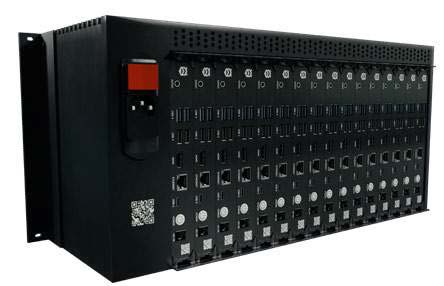
When working with display devices without built-in SDM slots, Hive’s Beebox, Nucleus, and Beehive come into play. They house one, two, and 16 Beeblades respectively. The Nucleus has become their biggest seller.
We're in that exciting, fast development mode, which means that we're bringing out new versions on a regular basis. We've got a new software almost every week. There are some big things coming up. We've got Dante support being added into all the devices, and we've just added a full pixel mapping solution so we can drive lighting fixtures. We're currently working on more options for integrating with third-party warping tools and camera alignment tools.
Still a very young company, Hive is constantly innovating.
Nexus is our future generation platform. It was a completely redesigned computer system. We actually had to design the computer itself from scratch. The Nexus is completely unique, because nobody has made anything that size with a 100Gb fibre output, or the ability to drive true 8K output and have multiple layers of 8K playback.
The newest piece of hardware in the range is the Nexus variant of the Beeblade. It’s the world’s first 8K60 output SDM Media Engine with HDMI Genlock at up to 8K60 on its HDMI 2.1 output, and includes SMPTE 2110 support via a high-speed 100Gb QSFP connection.
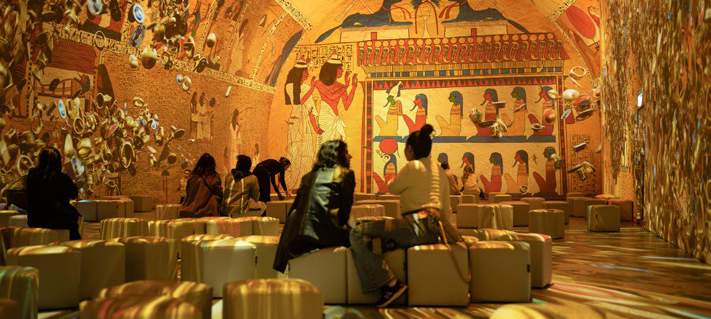
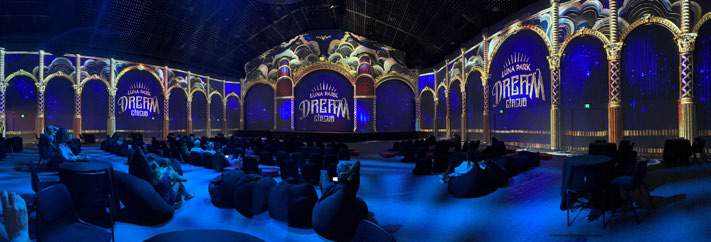
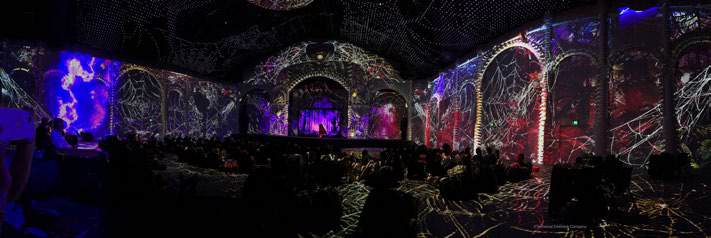
One of the biggest projects we ever did was the BBC Earth project in Melbourne. We also did Dream Circus with TDC at Luna Park in Sydney, and that's still going strong. TDC have been continuing to do some Hive projects. At the moment, there's a number of Hive immersive projects travelling around. Tutankhamun: An Immersive Experience was in London recently, and that’s now gone to Glasgow. It’s expected that multiple versions will tour Europe. The company that developed that is working on other shows, and it all leads to the Hive network growing.
Ironically for a UK company, Hive did some of its initial large projects in Australia.